Lifestyle

maintenance

8 essential car maintenance tips you shouldn’t ignore

In many parts of the world, owning a car is no longer seen as a luxury, but rather a necessity. The UK is recorded to have a total of about 38 million registered vehicles, with about 81% of its adult population living in a household with a car. The stats in South Africa are obviously quite different, but they certainly are growing. Either way, it is important to ensure that your car is in tip-top shape to carry out your various activities. Regular maintenance of your car is also critical to guaranteeing the safety of you and your passengers. So, how can you keep your car in good condition? Here are some tips you should consider.  1. Inspect your car often Always read your car manual first. It may sound pretty obvious, but it is one thing many people fail to do. Performing your vehicle’s maintenance checklist is very simple. The manual contains information you need and when and how these inspections need to be carried out. They are just simple exercises to assess your vehicle’s various components and wouldn’t require a professional unless it is vital to do so. Doing this yourself will expose you to a few things you may not have known and significantly increase your knowledge of your car.  2. Check tyre pressure  Your tyre pressure determines the fuel consumption capacity of your vehicle. Low tyre pressure leads to increased fuel consumption and risk of accidents due to lengthier braking distance. Checking your tyre pressure must be carried out weekly. For modern cars with smart systems, you will be notified if your tyre requires attention. The air pressure in your tyres can change significantly depending on the temperature. During winter, cold temperatures can cause tyre pressures to drop by as much as five pounds-per-square-inch (PSI), leading to significant problems if not corrected.  3. Inspect the tread depth Your tyre depth is very critical for its performance. Whether in cold, wet, or dry temperatures, you need your tyres to perform. Unlike F1 drivers who are privileged to lightning-fast tyre changes during sudden weather changes, your car tyres are built with broader contact patches to stand all weather conditions. Fortunately, current tyre manufacturers integrate tread wear bars into their compounds to reduce the difficulty in determining whether your tyre treads are deep enough to sustain exceptional ground contact even in wet conditions. You should get new tyres if your current tyres don’t have tread wear indicators. 4. Check your oil levels Your car engine requires a regular supply of lubricants to run smoothly and reduce any risks of mechanical disintegration of its parts. The oil pressure monitors your oil levels to ensure it is within the engine’s lines and channels. If your car is low on oil, you risk damaging its engine. Excess oil can also cause damage. So be mindful of how much oil you pour into your car engine and ensure they are within the right marks on your vehicle’s dipstick. However, the beeping oil indicator lights do not always mean insufficient oil but could be a leaky circuit, defective pump, or a damaged bearing. 5. Cooling system Every moving object generates heat, and the oil helps minimize the heat generated during friction to help prevent the engine from overheating. However, when your car is running at a much faster rate, it will require more than oil to dispose of the excess heat. This is where the cooling system comes into play. Maintaining your cooling system is a delicate process and requires professionally trained experts. Although there are several DIY tutorials, you should sit this one out for an expert to properly handle this. 6. The brake systems  This is an integral part of your car that needs regular checks. The brakes are responsible for slowing or stopping your vehicle from moving, duh! The brake pads and disc cause the friction between your tyres and the road cause the resistance required to perform its function. But every time this action is completed, your brake discs begin to wear, making it imperative to keep your eyes on it. For modern cars, the brake system can be complicated. However, you should check your dashboard for indications of a brake system requiring urgent attention. Keep your brake system components like rims, brake pads, and discs clean for better performance and replace them when necessary. 7. Check your seat belts  Statistics have proven that thousands of lives are saved each year by seat belts. Buckling up is so simple yet plays such a crucial role in preventing you from getting thrown out of your car during an accident. Wearing seat belts is compulsory in most countries. If an occupant in your vehicle fails to buckle up, the seat belt indicator on your dashboard will keep beeping. However, a faulty indicator will not perform this function, and the results can be lethal. You can visually inspect your fabrics, test the buckle, and check your car’s locking mechanism to ensure it’s in good shape. 8. Warning lights  The importance of your dashboard warning lights cannot be underestimated. Your car comes with several indicator lights depending on the model and manufacturer. While each brand comes with its own set of indicators, they are easily identifiable with the aid of your car’s manual. The colour of the light shows that a component needs attention but not necessarily an indication of trouble. Here is what each warning light means: Red is an indication of a problem and requires immediate attention.  Yellow/Orange means a component should be checked as soon as possible. Green is an indication of a fully functional part.  Blue and white are reserved for high beam and recommendation, respectively.  Regularly servicing your car is essential, and there is so much you can do in between trips to maintain it. Regardless of your car brand or model, it could quickly turn into a burden without proper maintenance. However, with these recommended tips, your car is guaranteed an enhanced performance and safety of its occupants

8 essential car maintenance tips you shouldn’t ignore Read More »

Audi Connect

It’s all about connection…

I joined forces with Audi South Africa to tell my deeply personal story about connection. It might seem odd being on a car website, but once you see the video, you will see what it is all about. In a nutshell, the Audi A4 launched with Audi Connect, which represents the digital connection between driver, vehicle, and infrastructure. Audi asked me to help them connect to a charity close to my heart and to bring a little bit of joy and connection to this special place. For reasons explained in the video, I chose the wonderful Atlantic Hope. I hope you enjoy this video, it sits exceptionally close to my heart and I don’t think I have been more proud of a project before. If you want to know more about Audi Connect, click on it.

It’s all about connection… Read More »

Safety features

8 safety features to look out for when buying a car

This may seem like a bit of an obvious article, but you know, I am all about safety. There are loads of safety features and accessories that you can get, or which might come standard on a car. However, if you are not sure that you can even trust them, then it’s going to be hard to know which to go for, and which to ignore. Let’s take a look at some of the best safety features and accessories you can get. Run-Off Road Protection First developed by Volvo in the XC90, this is essentially a feature that helps when a car has left the road. The moment the car detects that it might have left the road, a few things happen: the seat belts tighten, an energy-absorbing device between the seat and seat frame help to cushion any impact that might occur, the airbags are deployed and the brakes are put into action. Adaptive Cruise Control This is a system that you will find on the vast majority of premium cars today, and it could be one of the best motoring safety features that have ever existed. The system uses a range of sensors and some radar technology to lock onto the car that is in front on the road, thereby helping to maintain a safe distance. It does this by applying the throttle automatically as and when it is needed, and the brakes when they might be needed too. Because a majority of accidents on the road are a result of tailgating, this is an extremely effective measure against this kind of incident, and as such it is likely to save a lot of lives. It can even tighten the seatbelts where necessary. Eyesight Driver Assist Technology This is a simple and yet very effective system which, again, is already available on the majority of new vehicles and looks unlikely to be avoided in the future with new models. Essentially, it is a way for the driver to be able to see better in conditions where visibility might be poor. It uses two digital cameras, which keep a close eye on the traffic movement around the vehicle while also giving you a warning if there appears to be any traffic up ahead. But the really clever part is what happens if the driver doesn’t react in time: pre-collision braking comes on, as it does in many other technologies of this kind, to get clear of an impact, or at least reduce its potential impact on all involved. Driver Monitoring System With a driver monitoring system, in the most advanced cases, it uses facial recognition software to be able to determine if you, as the driver, appear to be sleepy, tired or generally unfocused while driving. In many cases, the system is also able to automatically change your seating position and your mirror angles wherever necessary. That might sound alarming, but the technology is very effective and it really is a trustworthy system that works very well. Autonomous Emergency Braking This has been around for a while now, but autonomous emergency braking is a life saving technology that has saved many lives. With this system, which is somewhat similar to the adaptive cruise control mentioned above, the technology senses the proximity of the cars in front of you, and applies the brakes if it thinks you might be about to crash. At low enough speed, this can prevent an accident occurring at all, and sometimes it might merely lessen the impact. Anti Lock Brakes This has been around for ages, and yet it remains one of the most important safety features that there are. If we did not have anti lock brakes, there would be many more accidents the world over every year, without fail. So what exactly is this technology, how does it work, and how come it tends to save so many lives? In simple terms, anti lock brakes are a way to stop the wheel locking up, which used to be a big problem. During hard braking, it used to be that the wheel would sometimes fail to turn, and as you can imagine this could cause a lot of trouble, and some potentially very dangerous situations, to arise. ABS has sensors at each wheel, which prevents the braking at each individual wheel, and in doing so avoids any particular lock-up from occurring, enabling the driver to maintain full control of the vehicle at all times while braking hard. Parking Camera Again, this is not new, but sometimes these safety features look a lot more like gadgets, and they can even be fun to use. That is certainly true of the 360-degree parking camera, which you will have noticed starting to appear in cars about a decade ago, although back then only in the pricier models. Now, however, it is something that you are likely to find in many new cars. But how does it work, and does it really help to make the experience of driving that much safer? It’s pretty simple to get your head around this one, as you might imagine. A parking camera is simply a series of cameras around the car which helps you to see when you are reversing or parking into a parking spot. This helps to avoid those scrapes that can occur as a result of poor parking, and will certainly save you from reversing in to those poles that just jump put of nowhere. Adaptive Headlights This is not immediately obvious as being an important safety feature, but it is a great feature to have. Many cars come with adaptive headlights now, but the majority of vehicles on the road still don’t have them. While they are not absolutely necessary, they can prove to be useful, and they are something that you would generally want to look out for whenever you are buying a new car or thinking about upgrading an old one with newer safety features. Adaptive headlights are simply those headlights that adapt to

8 safety features to look out for when buying a car Read More »

Volkswagen Golf GTI TCR

Do you want the Golf GTI TCR? I have the info…

Who would have thought that a Skype session about the Volkswagen Golf GTI TCR would get me so excited? Before I would have demanded I be invited on the launch to drive it (such a diva). But now with d*ckhead Corona around, driving a new car is not possible. Thankfully, the lovely people at Volkswagen realised that us journos were about to lose our minds and so decided on a virtual launch. Here is all the info you need to know about the Golf GTI TCR: WHAT IS IT? The Volkswagen Golf GTI has to be one of the most iconic cars in South Africa. There are GTI-loving communities and clubs all over the country. I don’t want to blow my own horn here or anything, but did you know that the first Golf 1 GTI arrived in South Africa the same year I was born. Coincidence? I think not. In 2013 the Golf 7 GTI arrived and more than 13 000 were sold, making South Africa one of the top 10 markets for Golf GTI worldwide. There have been a few limited edition versions over the years. Most recently would be the Clubsport S which saw 47 sold locally out of the 400 sold globally. BUT NOW FOR THE TCR The GTI TCR is the final swansong of the Golf 7 range and customers will be able to place their orders from May. Here’s hoping all 300 arrive, but some should be here by the middle of July…if the Corona sh*itshow subsides. It will be available in three colours; Pure White, Pure Grey and Tornado Red. It will boast a panoramic sunroof, park assist, active info display and We Connect Go. It will obviously have an exclusive TCR body kit which includes 19-inch “Reifnitz” alloy wheels, performance disc brakes, matte black side mirrors, TCR logos and TCR honeycomb decals along the sides. Inside will boast Velour sport seats, Velour Gear boot and door inserts, and sports steering with red 12Hr mark. PRICING AND ACCESSORIES Each customer will get an exclusive TCR keyring, cap and ownership certificate when you buy a GTI TCR. I can’t get Joey from Friends out of my head standing fully kitted out in Porsche apparel. I am not saying you will look like a complete chop, but you will probably will. Volkswagen GTI TCR: R669 900 PS. We will only the see the Golf 8 arrive in South Africa in 2021, so there is more than enough time to own this first.

Do you want the Golf GTI TCR? I have the info… Read More »

automotive

The automotive industry needs to resume operations immediately

I have been rather quiet the past few weeks while I wrap my head around what is happening in our world at this moment. It is both overwhelming and terrifying, to say the least. I know that everyone is suffering in some way, may it be financially or mentally. I am extremely fortunate and privileged, yet I find myself in both these camps. As the money dries up so the anxiety levels increase. It is the unknown that really sparks the fear. And as the Covid-19 pandemic bulldozes its way across our world, so we must stand together and find ways to come out of it on the other side, relatively unscathed. LEVEL 4 LOCKDOWN As we head in to level 4 of lockdown, I know that every industry can reason as to why it needs to be operating. I don’t know the ins and outs of other industries, but I do know the automotive world. And I know why it needs to be operational. And so this is a piece I wouldn’t usually write, but I feel that as an automotive journalist, I have a duty in trying to save the jobs of so many which in turn will have a huge impact on our economy…and yes, probably my own pocket too. AUTOMOTIVE INDUSTRY IN NUMBERS Did you know that the automotive industry contributes 6.9% to the overall GDP of this country? To put that in to something I can understand, in 2018, the automotive revenue in South Africa amounted to R503 billion. At present, there are approximately 1 600 franchise dealers in South Africa, employing 60 000 people directly. Taking the multiplier effect into account, this number increases to nearly one million people in the full automotive industry value chain. NAAMSA CEO, Mike Mabasa, estimates 21%-30% of SMEs could go out of business if the national lockdown extends into May, and up to 20% of industry jobs lost. Vehicle and components manufacturers currently employ about 120 000 people. Do you see why it is so important that this industry start operating again, if just from an economic point of view? SERVICING But there are more reasons than this. Mark Dommisse, national chairperson of  the National Automobile Dealers’ Association (NADA), says, “In order for the economy to function efficiently, it relies on various forms of crucial mobility services, including the repair and maintenance of private and public transport, parts availability, and new vehicle supply. The motor industry plays a critical role in getting people, products and services to market. It is therefore imperative that dealerships be among the first businesses to commence work when lockdown restrictions are eased.” As the GM of Marketing for Kia Motors South Africa, Christo Valentyn puts it, the reasons for servicing and maintenance to resume as a matter of urgency are plentiful. A car is usually a person’s second most valuable asset. It requires maintenance to protect its value and manufacturer’s warranty. While almost every manufacturer has measures in place to protect warranties, it does not change the fact that vehicles need services and maintenance despite not travelling many miles. Brakes can rust and bind to discs, causing discs to warp when used after long periods of not being used. Calliper pins can corrode, making brake performance less than required. Sometimes the interior electricals tend to develop a fault (electric windows get jammed, electric seats stop working) Cars that are not used over a long period may develop ineffective cooling from the air-conditioner and will need to be recharged. Most of the fluids, like engine oil and brake fluid, break down and lose their ability to lubricate. Even if you disconnect the batter, it cannot retain all the “juice” inside forever and it will eventually drain. With so many engines made from aluminium, they need constant lubrication as, after a period of standing, it will cause engine scoring and, in some cases, warpage. Gear boxes are mild and cast steel (as well as brass) and also need constant lubrication, as it can cause synchro failure, which in turn causes gear failure. WHAT’S NEXT? According to TransUnion Auto Information Solutions the automotive industry will take a year or more to recover from the Covid-19 pandemic. But like Dommisse says, it is a sector of the economy that can contribute enormous benefit in the immediate-term, a factor that needs to be seriously considered by government.  “We are a highly vulnerable industry. Motor retail is right on the edge but, if it is saved, and can open quickly, we can bring in revenue both for dealership staff and to the fiscus, which is a win-win for all.” I can only hope that our government considers all the factors when deciding on whether this industry can resume operations during level 4 lockdown. As I mentioned at the beginning of this article, I know that there are many industries that will want to start operating as soon as possible, but if the automotive industry can pave the way in the meantime, then I am all for it! PS. I miss driving! Sources: BusinessLive, Bizcommunity

The automotive industry needs to resume operations immediately Read More »

new vs old

New vs used, are you really clued up?

It always amazes me when someone says that they would never buy a new car. It is closely followed by, “Do you know how much money you lose the minute it drives off the showroom floor?” These people are generally not professional car-buyers or even in the motoring world. Why are people so against buying a new car? Depreciation off the showroom floor can and should not be your only reason for not buying a new car. There are, in fact, pros to both new and used cars. It comes down to what your needs are at the end of the day. Kriben Reddy, TransUnion head of auto information solutions, has made it so easy for you to make the decision as to whether you should buy new or used by listing these pros and cons to both: BUYING A NEW CAR PROS It’s new! Think about what this implies. No previous owner means you know exactly what you’re getting. There’s no worrying about service history or hidden defects. The dealer delivers it to you wrapped in a bow on the showroom floor, and you drive it out in mint condition. Plus you have a warranty if anything goes wrong. They’re safe and economical. Even cheaper models today have modern safety features like ABS and airbags. They also generally have new-generation engines, which deliver fuel consumption figures that owners of older models can only dream of, so you’ll often save money on your fuel bill as well. Warranties and motor plans. The upfront pain of the premium you’re paying for a new car is eased if your new car comes with a motor plan. This means you don’t pay for any running costs except fuel and tyres for the first couple of years of your car’s life (depending on how much you drive, of course). It also helps to know that if anything goes wrong, your repairs are covered. The thrill of it. Oh, yes. Admit it. Driving a new car has a special thrill. The new car smell. The subtle (or not so subtle) flaunting to your friends and family. Sure, it makes no sense logically. But we do it anyway. Just don’t go bankrupting yourself in the process of buying that new car. CONS Depreciation. You know the story: the moment you drive it off the floor, your beautiful new car drops in value by anything up to 30%. And because of all the upfront costs, like carbon tax, VAT and fees, you could end up paying a lot more than the original sticker price. Tip: make sure you have shortfall cover (or gap cover as it is often known) to cover any gap between the market value and the insured value. They’re expensive. Make no mistake, new cars can be a challenge for even the healthiest budget. You might get unheard of technology in even the most modest mid-range cars nowadays – but all that new technology and styling comes at a cost. Insurance. Newer cars are worth more and are a higher risk, so they’ll obviously cost more to insure. Make sure you do your homework on insurance costs before you make your purchasing decision. Work this out across the full period that you’ll be paying the car loan, as your financial institution will require comprehensive insurance until it’s paid off. USED CARS PROS Their sticker price is more affordable. For many people, this is the single biggest benefit of buying a pre-owned vehicle. If you’re prepared to drive a slightly older model, you can pay as much as half the price of a new one. The first owner took the biggest hit in terms of depreciation, so even when you choose to sell, you should still be better off. More car for your money. If you’re prepared to drive a pre-owned, slightly older model, you can certainly trade up. A 2012 BMW 750i for the price of a new VW Polo? Take my money already. Just check the price of services and tyres before you live out your captain of industry dreams. CONS Previous owners. A car may look clean from the outside, but you don’t know how it’s been driven or if it has any lingering long-term issues. A service history helps. But if it’s a high-performance car, you might need to assume it’s been driven hard. And if you’re buying privately, you usually buy voetstoots, which means you have no guarantee or recourse if something goes wrong. Tip: use the FirstCheck app, which gives you the current market value of the car, its full history and the legal status of the vehicle. This includes a link into bank and SA Police Service databases to check if a car is currently being financed, or is flagged as stolen. More repairs. It’s a sad fact of automotive life: as cars age, things break. The higher the mileage, the greater your risk of major repairs. If you don’t have an after-market warranty for those big-ticket items like gearboxes and clutches, you could be on the hook for some unexpected bills. NOW THAT YOU KNOW IT ALL As you can see, there are more pros in new, but there are, of course, risks involved. The bottom line is that it’s all down to individual choice and risk tolerance. You have to know what your priorities are for your next car, and choose accordingly. If you need fuel economy and reliability, new is probably a better choice. If you want more wheels for your money, or a lower sticker price, then used is your friend. Next time you tell someone that you would never buy new, please give them more of a reason than depreciation. Don’t forget to download the FirstCheck app to find out the true value of your car. That way, you will know what you can afford when buying yourself a new, or used, car.

New vs used, are you really clued up? Read More »

car market doom and gloom

Is it all doom and gloom in the local car market?

I can’t even recall how many times I hear someone comment on South Africa’s car market and just how expensive cars are these days. And while I cannot agree more (I would struggle to afford a car myself), the local car market has tried to do what it can to remain affordable. New vehicle price increases have remained below inflation for more than two years now. Despite this, the number of new vehicles financed in Q4 of 2019 – a key indicator of sales – fell 1.6% compared to the same period a year ago, although the number of used vehicles financed showed a 1.4% increase. According to the latest TransUnion SA Vehicle Pricing Index (VPI), the South African car market will remain depressed for the foreseeable future, despite the interest rate cuts and fuel decreases. Kriben Reddy, head of Auto Information Solutions for TransUnion Africa, says, “The major issue facing the local automotive industry is the need for structural reform at a macro-economic level. We need to see sustained positive economic growth to get the new car market moving, and the challenge is that in 2019 we weren’t there. The problem is, it is unlikely that this situation will change in the short term, indicating that we may continue to battle for some years yet…” IT’S NOT ALL BAD NEWS Thankfully, it is not all doom and gloom. Export sales of South African built cars grew 17.7% in 2019 over the previous year, providing some measure of relief for local manufacturers. “Exports provide a bright spot by retaining jobs and keeping production lines going, but they are still a relatively small part of greater sales,” says Reddy. GOING PRE-OWNED The report also shows that the used-to-new vehicle ratio has increased from 2.03 in Q4 2018 to 2.09 in Q4 2019, which means that for every new vehicle financed, 2.09 used vehicles are financed. In the used vehicle market, more than 36% of used vehicles are under two years old, with 6% of those being ex-demo models. This indicates that consumers are opting for older vehicles as pressure on disposable income increases, said Reddy. For the past seven quarters, the percentage of cars (new and used) being financed below R200 000, R200 000 – R300 000 and over R300 000, remains the pretty consistent. This proves that people are spending less on cars and opting for less expensive cars. NOW FOR THE GOOD NEWS Reddy says the good news for consumers entering the buying market is low price increases, low inflation rates predicted for 2020 and a range of marketing incentives from dealers, which include trade assistance to vehicle discounts. “The challenge is that to get a customer into a new vehicle, you have to get him out of the old vehicle first. And in many cases, the very deal structures that are meant to stimulate the market – like offering terms of to 84 months on car finance – are having the opposite effect by taking customers out of the market for longer. If you take a deal over 54 months, conventional wisdom is that you’re going to be back in the market after 36 months. Over 84 months, you’re taking that customer out of the market for another 1-2 years,” said Reddy. Don’t forget to download the FirstCheck app to find out the true value of your car. That way, you will know what you can afford when buying yourself a new, or used, car.

Is it all doom and gloom in the local car market? Read More »

hijacking

Hijacking and what you really need to know

It has been a while since I posted about hijackings, in fact, it has been a while since I have posted anything at all. That is because I have been travelling across America on a much-needed holiday. But you were never far from my mind. While gorging myself on everything deep fried, I chatted to a few locals about crime and specifically about hijackings and cars being stolen. What a wonderful thing it must be to live in a place where hijacking is such a foreign concept. Sure, it does happen, but it’s not like living in South Africa where around *43 hijackings occur every single day. WHERE ARE YOU SAFE? Like anywhere, hijackings in America occur more frequently in certain places and one needs to be far more aware and alert. I returned to South Africa only yesterday, but it got me thinking, if someone from overseas came here, surely they should know the more dangerous places to avoid. This doesn’t only go for tourists, though, but also for our own people of this land. Arming yourself with information is key. According to an article on Business Insider, more than half of all vehicle-related crime in South Africa occurs in Gauteng. Hijackings are more prevalent in Johannesburg, but more cars are stolen in Pretoria. Durban comes in next and the Western Cape takes third position, with hijackings mainly occurring in Khayelitsha while theft is highest in Cape Town central. According to the article, other theft and hijacking hotspots in South Africa included eMalahleni in Mpumalanga, Ibhayi in the Eastern Cape, Rustenburg in the North West, Polokwane in Limpopo and Bloemfontein in the Free State. TIMING IS EVERYTHING It is also important to note that most vehicles are hijacked or stolen on a Saturday, followed by Thursday and Friday for hijackings and theft respectively. The reports most often come in between 20:00 and 21:00 but don’t think you are safe in broad daylight because the next most popular time reported for hijackings is between 12:00 and 14:00. WHICH CARS ARE TARGETED? According to Business Tech, the most hijacked cars are sedans and hatchbacks while bakkies come in third. It’s well known that in South Africa Toyota is the most hijacked brand with Volkswagen coming in second. But one needs to consider that these are also the two most popular brands and so there are more of these vehicles on our roads. It doesn’t mean that because you drive a Toyota or a Volkswagen that you are necessarily going to be targeted. HOW TO KEEP SAFE This is the whole point of my article. How the heck are we supposed to keep ourselves safe in such an unsafe country? There are many anti-hijacking tips one should take note of, but this is sometimes not enough. This is where an app like 911Response24 comes in. If you find yourself in a situation, all you do is press the panic button on your phone (you would have obviously downloaded the app already). A signal is immediately sent to emergency services as well as your list of friends and family, who are all notified as to your exact location. The emergency services located closest to you are dispatched. Whether it is a medical emergency or if you are in need of an armed response vehicle, the tech team behind the app take care of it all. Especially if you are unable to talk. From the time an alert is triggered, everyone is kept updated. You, your friends and family and emergency personnel can all see when help has been dispatched in real time. If you have any questions about the app, please get in touch with me. Even if you just want a few tips on how to keep yourself and your loved ones safe on the roads, give me a hollar on Facebook, Twitter, and/or Instagram. *Based on the South African Police Services (SAPS) crime statistics for 2018/2019. 16,026 reported incidents were over this period.

Hijacking and what you really need to know Read More »

Rola

Selling your car can be a positive experience

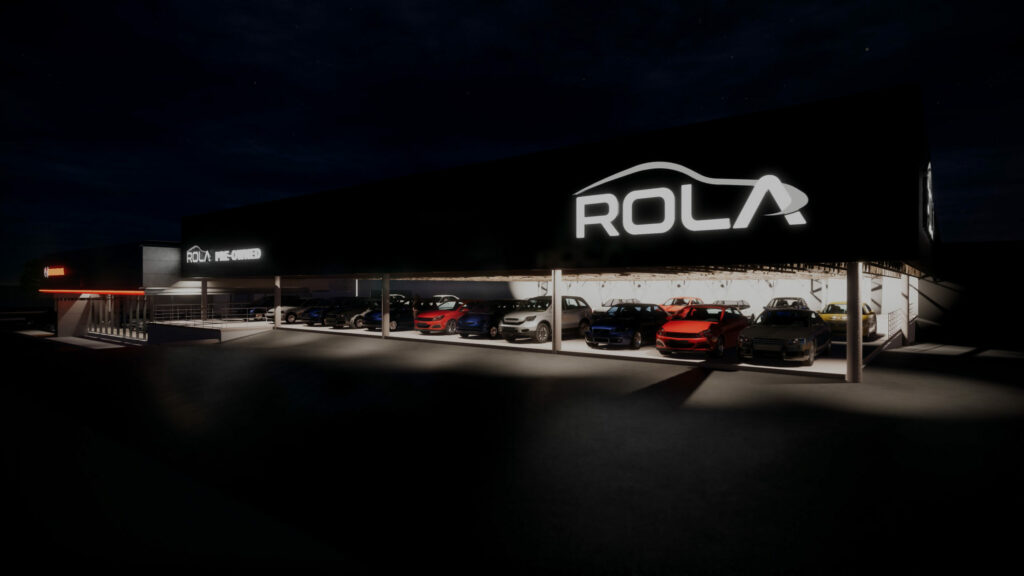
Do you guys recall the video I posted last year about Rola Motor City? I described it as the ‘Disney World of dealerships’ because it really is. Eight brands in one convenient location with a 4X4 course to boot. I went to see them last week after my husband sold his car to Rola Volkswagen Malmesbury and had the most incredible experience. I wanted to find out more about what makes them so good at what they do. TAKING CARE OF YOU Selling your car can be quite a bittersweet moment. On the one hand it means you might be getting a new one, but on the other hand, it means saying goodbye to a car that has hopefully been very good to you. It can also be helluva confusing with all the paper work and figuring out how much you can sell it for etc. Basically, it can be a real pain in backside. I am not going to even mention the safety issues of selling your car. Ok, I will mention them. I have heard horrific stories of people being hijacked when selling their car privately. It is a scary reality in South Africa. There are also no guarantees when selling a car privately. There are thousands of people out there just waiting to scam you. This is where Rola takes care of you. Rola has been in the motor industry for more than 50 years. This has proven that their customers trust them and believe in their ethical processes. A GUIDING HAND As I mentioned, it can be a daunting and confusing process. Rola is there to guide you through the entire process and ensure you have all the correct paperwork so that you can get paid immediately. And it could not be more convenient with 15 dealerships throughout the Western Cape that you can take your vehicle to for an inspection, or they can even come to you. Rola also has knowledge and data to ensure you get an accurate and fair price for your vehicle. And their buying team are skilled and highly trained in the buying process. KNOW YOUR WORTH When my husband started to look at selling his car, he contacted a number of dealerships and many just wanted him to trade it in with them. He wanted to make sure he got the best price possible and this is not always the case when you trade in a car. When he contacted Rola, not only did they give him, by far, the best price for his car, but it wasn’t based solely on a trade-in. Only once he decided that they will be best people to deal with did he then go the trade-in route. And it worked out for the best. Instead of simply trading your vehicle in when you decide to upgrade (or downgrade), contact Rola for a price on your trade-in first. This ensures you are paying the correct price for your new purchase and it won’t be influenced by the trade-in vehicle. ROLA’S SIX EASY STEPS How does it work at Rola, you ask? Well, they have set up six easy steps to ensure that not only will you get the best offer, but that it will be convenient and fuss-free. 1)      Submit your personal and vehicle details 2)      Rola will contact you to confirm details and needs 3)      You will receive an estimate offer 4)      *Send the required documentation and book an inspection 5)      Inspection of your vehicle and finalise offer 6)      Payment is made within 24 hrs *Docs needed: ·         Copy of ID ·         Proof of Address ·         Copy of vehicle’s registration document (RC1) ·         Valid settlement letter (if applicable) THIS IS NOT JUST ANOTHER AD I realise that this sounds like an ad for Rola, and because I am all about honesty, I will tell you that I am sort of an ambassador for them. BUT, I will never promote anything that I don’t genuinely believe in. And I only started working with them after my husband had dealt with them. This had a huge influence on me and was one of the main reasons I wanted to get involved with such a great company. I am a sucker for great service, I mean, who isn’t? Check out the Rola’s website and contact them (or me) if you have any queries. They are genuinely there to help you and you won’t feel like you are being taken for a ride. You’ve got my word!

Selling your car can be a positive experience Read More »

sell firstcheck app

How to find out the true market value of your car

Just the other day a family member was telling me how they have struggled to sell their car because most of the places they have approached have offered them so little for it. When I asked what the market value of the car was, they weren’t sure. This is a common problem among car sellers. It can be difficult to determine the market value of a car. Then there are the issues of buying a car. How do you know if a car has been stolen or if it has a full service history as the buyer claims? Introducing the FirstCheck app. Together with Transunion, this app is now providing consumers with information that was previously reserved for car dealers, banks and insurance companies. Basically, as a consumer, you now have access to the bank and SA Police Service databases to check if a car is finance, flagged or stolen. As head of Auto at Transunion Africa, Kriben Reddy, says, “Knowing the value and history of a car means you’re far more empowered when you enter the buying cycle. With this app, you’re not only able to put a fair price on the car upfront, but you’re also far less likely to fall victim to fraudsters by having insight into the full history of the vehicle.” So what exactly does the FirstCheck app offer? THE VALUATION REPORT The valuation report provides both current trade and retail values to ensure the price being asked reflects the vehicle’s true market value. This also helps consumers ensure they are paying the correct insurance premiums. It also offers a view of how much the vehicle has depreciated over the past 12 months, and projected future values. THE VERIFICATION REPORT The first part of the verification report provides the car’s original manufacturer information, including vehicle identification number (VIN), engine number and colour, and highlights any discrepancies. The second part follows the vehicle through its lifecycle, as it were, with full financing information, legal status and even mileage at certain points. The verification report also tells a purchaser if a car has been “microdotted” – where a car is marked with thousands of dots. If so, potential buyers can use a microdot scanner to check if body panels and even engine parts have been replaced. If you are in the market to buy or sell your car, I highly suggest you download this FirstCheck app.

How to find out the true market value of your car Read More »

Copyright © 2024 Juliet McGuire Motoring Media.